In-depth Story: Tonier Cain – How Treating Her Trauma Ended a 19-year Addiction and Transformed Her Life
Fourteen years ago, she lay on the cold floor of a prison cell at the end of her rope. Her surroundings were familiar to her because for 19 years, home had either been underneath a bridge or in a prison cell. In fact, this marked the 83rd time she had been arrested. Her situation was so grave she would never live a normal life, they said, not after nearly 20 years of addiction.


Fourteen years ago, she lay on the cold floor of a prison cell at the end of her rope. Her surroundings were familiar to her because for 19 years, home had either been underneath a bridge or in a prison cell. In fact, this marked the 83rd time she had been arrested. Her situation was so grave she would never live a normal life, they said, not after nearly 20 years of addiction. Yet all she needed was for someone to take the time to discover the WHY behind her behavior. As she lay there on the concrete floor, weeping uncontrollably and desperate to keep the baby that was growing inside her, she uttered the words that would change her life forever, “God, I don’t know if you listen to people like me. But if you do, please help me.”
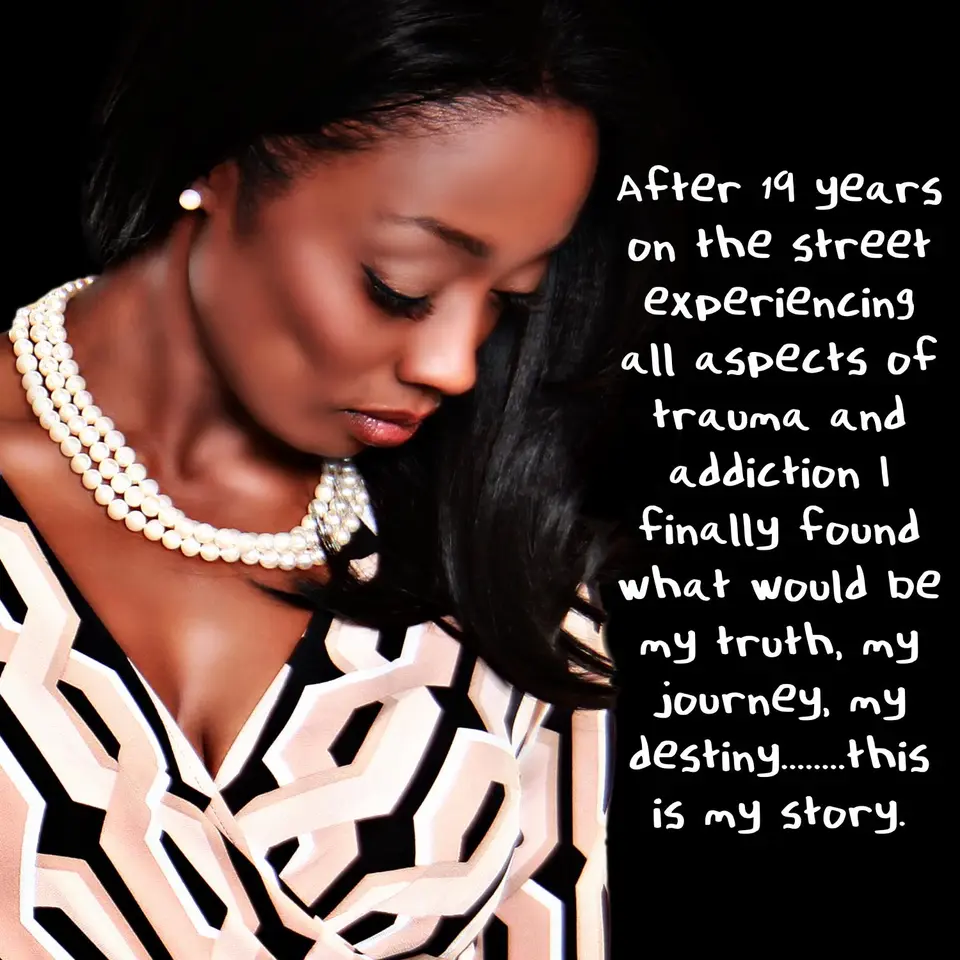 Tonier Cain is the CEO and founder of Healing Neen, Inc; founder and president of Neen Cares, Inc; founder and Co-CEO of MET-R – a nonprofit organization that provides services to trauma survivors worldwide; and an international speaker on trauma, incarceration and recovery.
She has been featured in many articles, including a feature in the December 2014 issue of Ebony Magazine, and has been a guest on over 17 talks shows.
I had the opportunity to hear her speak at a recent event in Rochester, New York, where she shared her compelling story and moved the room to tears. I sat in awe as she spoke about her darkest days and how God delivered her from the bondage of drug addiction.
Her address to the congregation at Rochester Pentecostal Power of Deliverance, was nothing short of amazing as she spoke a word of deliverance and prayed with every person who came to the alter. She was so humble and personable, and took the time to speak with everyone who came up to greet her.
“I’m just someone who started a new life…day by day growing and healing,” Cain told The Weight She Carries. “A lot of people think I can save them, I can’t. I can just tell them who saved me.”
Her story has gained recognition from prominent leaders in the US and abroad, and she has delivered keynote addresses in the presence of the President of the United States, United Nations, multiple government agencies, teachers, community and civic organizations.
But 14 years ago, her life was very different…
Cain grew up in a single-parent household and was the oldest of ten children. She and her siblings were abandoned and neglected often by their mother who struggled with substance abuse and alcoholism.
Things worsened when at the age of nine. Cain was molested by a family friend and her mother wasn’t present to help Cain deal with the pain of that trauma.
Not knowing how to deal with the pain, she turned to alcohol she found in her mother’s home. What she realized as she drank the half-empty glasses of alcohol left over from the parties her mother threw, was that it numbed the pain.
The living conditions at home were so dire that Cain and her siblings were eventually removed from the home and placed in the foster care system.
By age 15, Cain was an alcoholic.
At age 17, she married an older man who severely abused her. By 19, Cain was addicted to crack cocaine and began to do whatever it took to support her addiction.
“I wasn’t one of those addicts that was able to work. I lived in the streets. I was that homeless crackhead, crack hoe in the community. I was the last thing you’d see at night and the first thing you’d see in the morning…streetwalking, prostituting and very dirty – eating out of trash cans. That was the type of addict I was.” – Tonier Cain
Soon, her behavior landed her behind bars.
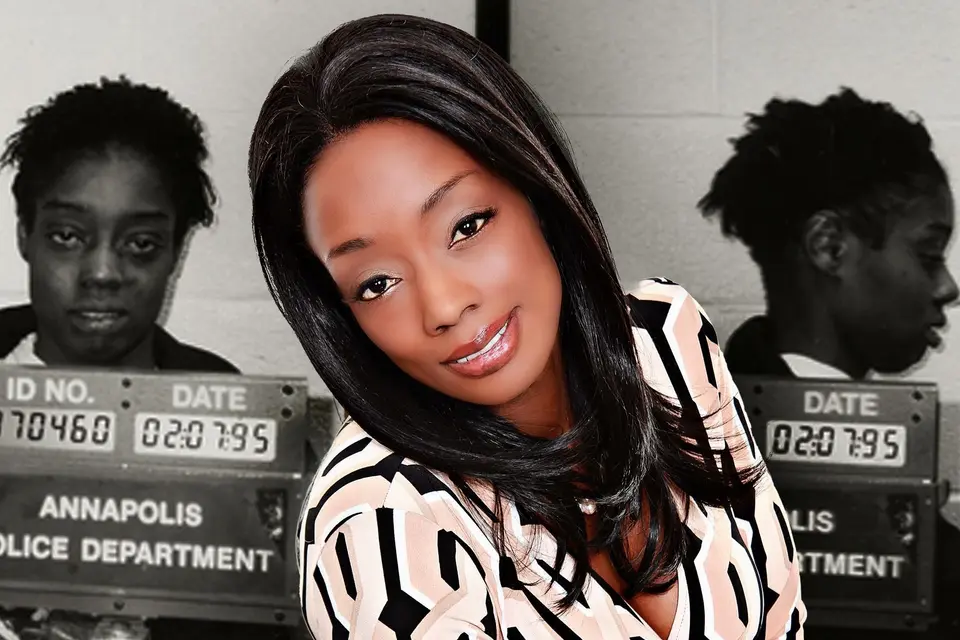
Cain was first arrested when she stole a check from one of her cousins whom she was in foster care with. Her cousin had to press charges in order to get reimbursed by the bank. It was a felony charge because of the amount and because she had defrauded the bank.
“All of my arrests are because of things I’ve done to support my addiction,” Cain said. “I started to smoke crack (cocaine) around age 19, and I had already been snorting coke and I was an alcoholic by age 15. So, it didn’t take long for me to get hooked onto crack cocaine.”
Over the course of 19 years, Cain was arrested 83 times, and 66 of those arrests led to convictions. She entered numerous drug treatment programs, but none of them worked because they sought to treat her behavior, which was just a symptom of the trauma she had endured since her childhood.
In addition to all the trauma, the pain of four children being essentially ripped from her arms because she was seen as an unfit mother was devastating.
“And then I was being diagnosed mentally. People understood quite well that I was an addict, but they never looked deeper to find out why. Why is she an alcoholic at 15? They just saw the outer person and judged me by that,” Cain said.
Though detrimental to her health, Cain said she endured so much pain that the drugs prevented her from taking her own life.
“After everything I’ve been through, if I did not have crack cocaine at that time, I probably would have (blown) my brains out because the memories are just too painful,” she said. “It was almost too painful to breathe.”
 “I felt disregarded. People have a certain view of addicts. They see what we look like, maybe what we smell like, what we’ve done. They don’t see past that. And then pregnant women? Oh, my goodness, we are the worst of the worst. So, you would have people who would shake their head in disgust. And you became that dark dirty spot in the community.” – Tonier Cain
But in 2004, something happened when she was arrested for the 83rd time.
“So, I’m in prison, my 83rd arrest. I had tried everything else,” Cain said. “I had so many failed treatments and the treatments I was getting were the traditional treatments where they think they need to break people down to build them up, which is the most ridiculous thing because we’ve been broken down so many times in our lives.”
Cain felt something move in her spirit, and having tried everything else only to end up back where she started, she decided to try God.
“Because of that prayer and because I was so desperate, I signed up for a program for inmates with infants,” she said. “I really didn’t think these people could help me, I really didn’t. But they told me I would be able to keep my daughter with me if I was in the program.”
According to an article in The New York Times, two-thirds of women entering prison are mothers. If those children are fortunate, they will be taken care of by their grandparents or other family members. But a large number of children end up in foster homes and bounced around from home to home for years.
“At the beginning of my healing process, I would tell people that I didn’t want to lose my daughter,” Cain said. “Here I was, pregnant, and I didn’t want to lose her. But the fact is I didn’t want to lose my other four kids either.”
According to Amnesty International, despite accounting for a mere 5 percent of the world’s population, the United States is responsible for nearly 22 percent of the world’s prison population, which translates to over 2 million people held in adult prisons and jails.
Even more disturbing is an ACLU report that 92 percent of incarcerated women in California prisons have been traumatized at some point prior to their incarceration.
“Sexual abuse, physical abuse, emotional abuse…and these are government numbers, so they always underestimate it at times,” Cain said. “Pretty much what we are saying is that almost everybody who has come through those doors has some type of trauma in their lives. For the most part, it’s about what happens to you, not what’s wrong with you.”
The report went on to state that women of colour are incarcerated at a higher rate than women of other races.
Black women represent 30 percent of all women behind bars in America, yet account for just 13 percent of the female population in general. Hispanic women make up 11 percent of women in America, and account for 16 percent of incarcerated women...READ MORE ON PAGE 2
 “My trauma started very early on. Not just neglect and abandonment where I was raised, but also the molestation. And then going on to being an adolescence and being raped so many time I can’t even count. Being married to an older man that beat me, and then out of punishment, took my firstborn child away from me. And then going into the system and put into a program where the drug counselor raped me, and then I was sexually abused in corrections. So, you have all of that.” – Tonier Cain
Whenever people told her to get help, mostly court-ordered by a judge, Cain would seek treatment, but the difference this time, she said, was that she found something that worked for her.
“The program helped me deal with what happened to me instead of what was wrong with me,” she said. “All the other programs I went to weren’t strength-based. They were always talking about my weaknesses and not my strengths, and we all have strengths.”
In addition, Cain had a new-found relationship with her Saviour, Jesus Christ, and had things set in place to make it possible to keep her daughter and live a better life.
Cain responded well to the trauma program, to the extent that she was asked to represent the program. It was at this point when she began sharing her story. It was difficult at first, but once she did, opportunities began to open up for her.
“I was involved in one film called Behind Closed Doors, a film about four women who were retraumatized in the mental health system. It was hard (to tell my story) in the beginning because as I was speaking it I was living it again,” Cain said. “But when it becomes your purpose, there is something spiritual that happens when you tell it. And it’s not painful anymore, it’s necessary.”
Addiction often severs relationships, and rebuilding those bonds is difficult to do. Cain, who is now happily married, recently released a book called Relationships After Trauma, a follow up to her first book Healing Neen – which gives a detailed account of her life.
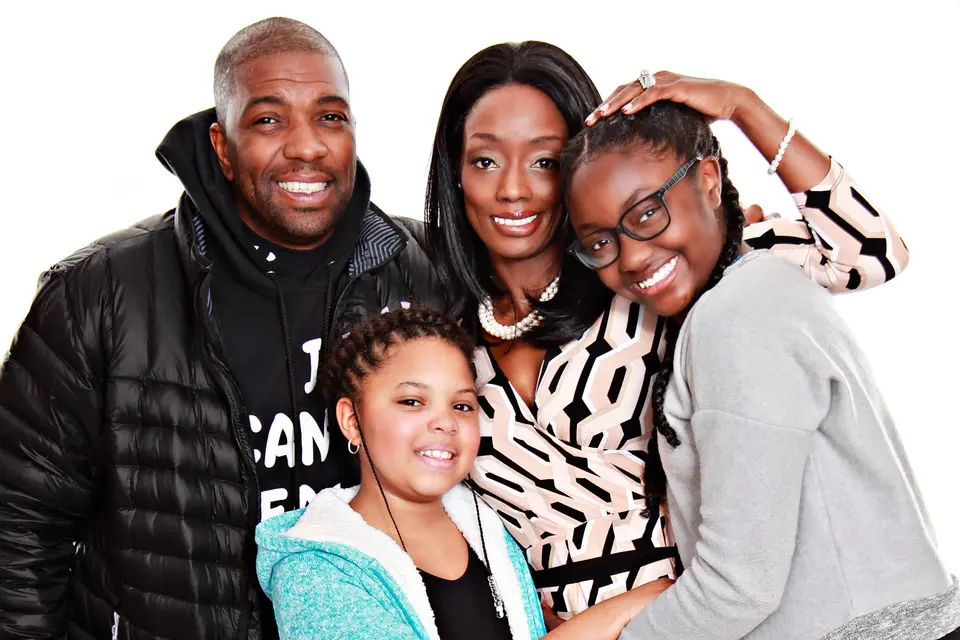 “Here’s the thing: we all desire to get better, but the fact is there aren’t a lot of things put into place to help us be successful in this. So here I was again, desiring to get better, but this time I was able to maintain the desire by reaching out to resources and enrolling into a program that could deal with my trauma, so I could get better.” – Tonier Cain
“You’re always being triggered. Just because we heal doesn’t mean we forget. So we have to put certain tools in place to help us self-regulate,” she said. “So this book is an account of certain tools that I’ve had to develop to deal with motherhood, dating, marriage, being a child of God, and a friend.”
This July, Cain will be traveling to Nigeria to work with an organization helping women and girls who were kidnapped.
“The response from people in Nigeria to my story has been overwhelming. The number of messages I’ve gotten from people saying, ‘help me, help my sister, my brother, my mother…’ God has a purpose for me there and he is calling me to Africa,” she said. “He is really connecting to me to Africa in an amazing way and I’m so excited. So, I’m willing to go anywhere I can go to do as much as I can do in Africa because I feel it in my spirit.”
When all is said and done, Cain has a burning desire to help people and give them hope. And as the former team leader for the National Center for Trauma-Informed Care with the National Association of State Mental Health Program, she is using her expertise in trauma care to help provide others with the same resources she received 14 years ago.
 “My whole life is about helping others see that there is hope. I like to believe that I’m walking in the fullness of that purpose, and I believe my purpose is to give hope to those who are still bound by something that is holding them back from being all that they can be.” – Tonier Cain