In-depth Story: How Francisca Awah Mbuli Escaped Modern Slavery and is Helping Other Women do the Same
When Francisca Awah Mbuli returned to her native of Cameroon from graduate school in Norway six years ago, she had a difficult time finding work. Several years went by, and in 2015, she was approached by someone in her community whom she had grown up with. The man told Francisca about an opportunity to teach English in Kuwait and encouraged her to take the job because she is we
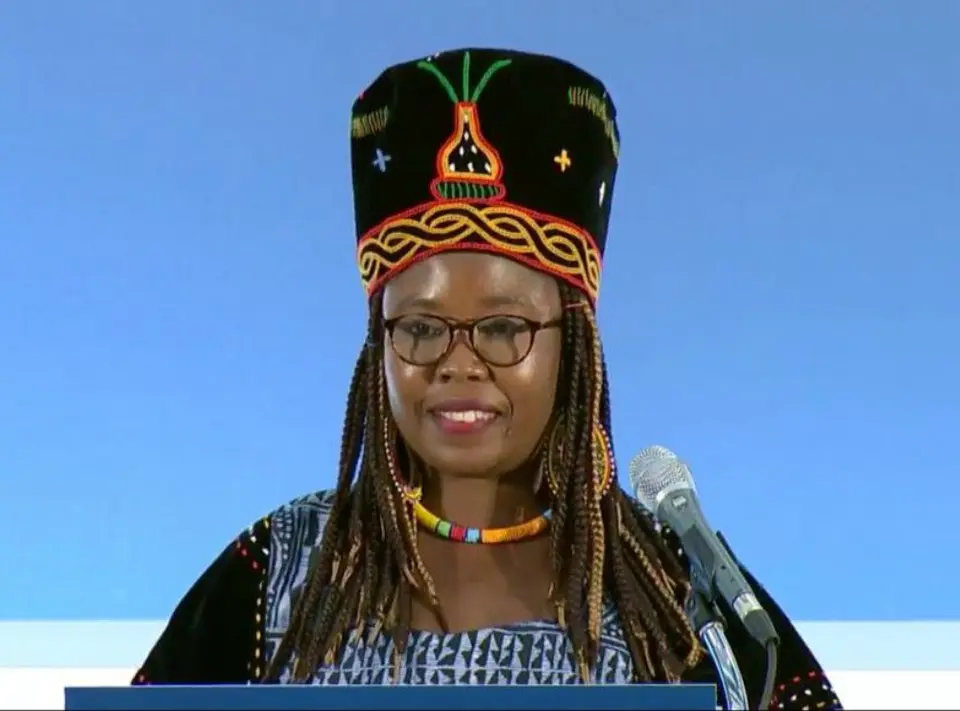
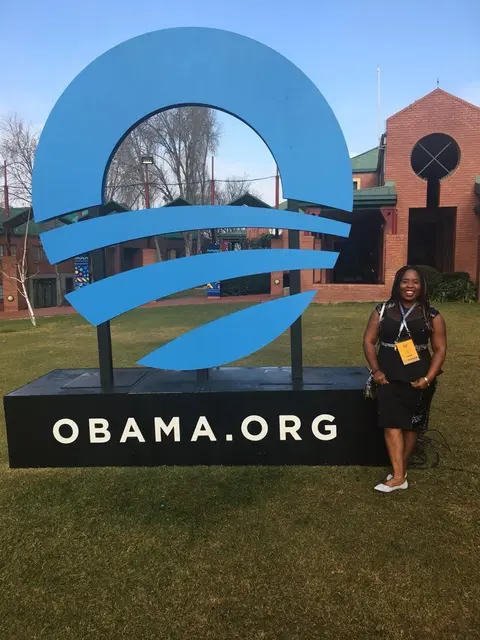 When Francisca Awah Mbuli returned to her native of Cameroon from graduate school in Norway six years ago, she had a difficult time finding work.
Several years went by, and in 2015, she was approached by someone in her community whom she had grown up with.
The man told Francisca about an opportunity to teach English in Kuwait and encouraged her to take the job because she is well educated. The pay was great, and it would allow her to provide for her 2-year-old son, he said.
“When we define human trafficking, those who are trafficked are most often trafficked by people they know very well,” Mbuli told The Weight She Carries. “My trafficker studied my vulnerability and knew I needed a job to take care of my family.”
Mbuli diligently prepared for the new opportunity. She bought clothes she deemed appropriate for the new role and bought a dictionary and other teaching tools.
Within three weeks, she had a visa for Kuwait.
“The only part of the visa that was in English was my name,” she said. “Everything else was in Arabic.”
What Mbuli did not know at the time, was that the type of visa she was issued bound her to domestic servitude and stripped her of her human rights.
The first red flag was when she arrived at the airport in Kuwait.
“Were about 200 of us there from many countries and they placed us in a room for seven hours,” she said. “It was hot in that room and they wouldn’t allow us to even lean against the wall. We had to sit on the floor.”
Mbuli was surprised by the poor treatment because she knew how well respected teachers are in Cameroon.
Finally, she was told that her employer had come to get her, and her passport was given to the man who came to pick her up, she said.
For the next 17 days, Mbuli worked day and night for a family with two toddlers and received no pay.
“It was so bad. Many of the things I had to do were very degrading. I struggle to say how terribly they treated me but I’m getting stronger by the day, and I realize that it is part of my healing process to speak out.” – Francisca Awah Mbuli
When she complained about the work, Mbuli was taken back to the agency that had sold her to the family and they placed her with a second family.
The second family changed their minds when she arrived at their doorstep, so she was taken back the agency. About an hour later, another family bought her.
“I had no choice at all,” Mbuli said. “I was the only maid there. I washed the cars, I worked in the garden in extreme heat. I cooked for them, I washed their clothes, and this third home is where I was sexually abused.”
The abuse would take place when the wife would travel. On one occasion, the wife left for two weeks and Francisca was sexually violated every night during that time period, she said.
“I felt powerless. He reminded me of the day they bought me, and his wife had told me the word ‘No’ could not be used in their home,” Mbuli said.
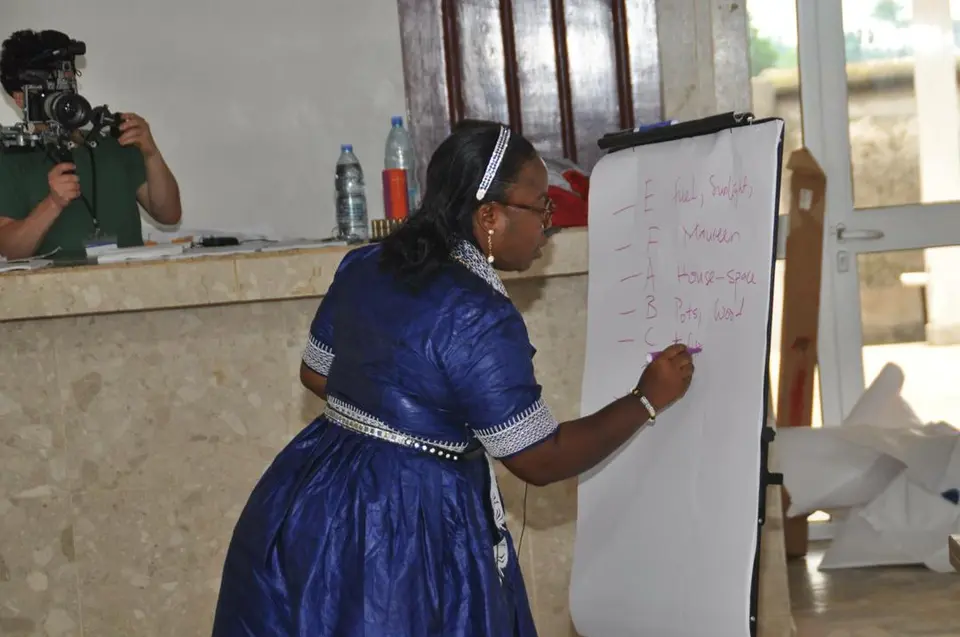 “There was a time when it was too much for me. The wife was still around and I was helping her pack her clothes as she prepared to go on another trip. I told her that my son is a street child in Africa because I promised I would send money to care for him, but I haven’t been paid any money. So I begged her to let me go back home. She told me to look at the flat screen TV in her room and said, ‘You are like a commodity; you are like that TV. I bought you. If you don’t work pay back the money I bought you with, pay the money for your flight and go back home.’ That was the worst day of my life – somebody equating me with a commodity…a television. The rape was bad, but I felt so bad that day.”- Francisca Awah Mbuli
The couple had paid USD$3,000 for her, and Mbuli knew there was no way she could pay that money back.
“I would work 20-22 hours a day. At night, I would wash dishes and clean the house. During the day, I would wash the cars, work in the two gardens they had, and cook their food,” she said. “I would go to the restroom 10 times a day just so I could rest. During that time, I would try to email people for help using a cell phone I had purchased upon entering Kuwait.”
One day, Mbuli came across a program called The CNN Freedom Project, which reports on modern-day slavery. She began secretly watching the program in the kitchen while she cooked, making sure the TV was muted.
“Each time the program would come on, I would see advertisements of humanitarian organizations fighting against modern slavery and I would take down the number and address and put it in my pocket,” she said.
After staying in that home for two-and-a-half months, Mbuli ran away to seek refuge at one of the African embassies in Kuwait. Some were not friendly to her plight, but eventually she ended up at the Central African Republican Embassy. It was on a Friday.
Mbuli spent the night sending emails to every humanitarian organization she could find, asking for help.
The following day, one of the diplomats arrived.
“After I told the diplomat my story and he asked me for the number for my employer. I provided the number and he called the family I had worked for. The next day, the husband came with my passport. It was only by the grace of God.” – Francisca Awah Mbuli
The following Monday, the employer took Mbuli’s passport to the police for a signature, which meant she only had seven days to leave Kuwait. If she didn’t, she would be arrested, she said.
The clock was ticking.
“I reached out to so many organizations, some referred me to organizations in my country that I was already communicating with. Knowing what I was going through, some would even shout at me and say, ‘Stop disturbing my phone. Did we send you to go and put yourself in such an ordeal?’ My parents thought I was going to die there because the money needed for my flight was an amount they would never have.” – Francisca Awah Mbuli
Mbuli reached out to Katie Ford – founder and CEO of Freedom for All in the US – and asked for help.
Ford asked Mbuli what she needed.
“I told her I needed money for my flight, so I scanned a copy of my passport and sent it to her and she sent me a ticket through my email,” Mbuli said.
Within four days, Mbuli was on a flight to her native Cameroon.
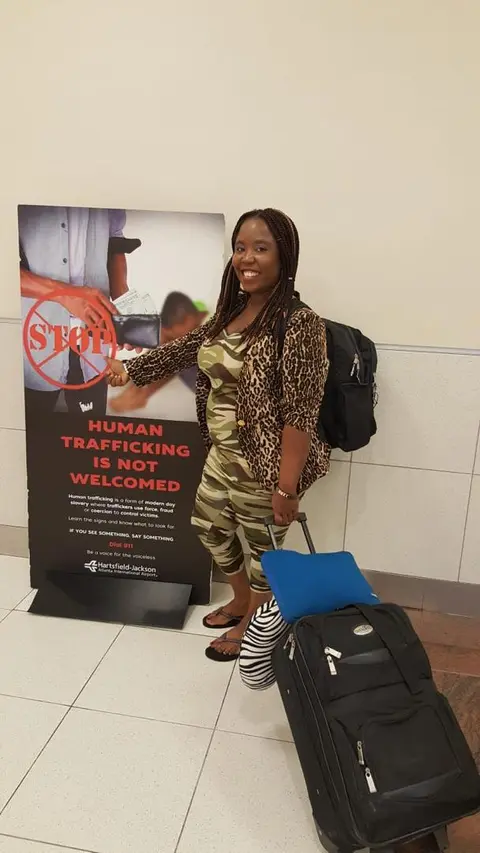 “I was so happy when I got to the airport. I met five other Cameroonians leaving and we were laughing and speaking in our native language, Pidgin, despite not looking good. My face was covering with rashes due to the harsh weather. The soles of my feet were cracked, and I had wounds on my legs from the thorns in the garden. My legs were so swollen, and I was ashamed to go outside when I got home.” – Francisca Awah Mbuli
Read more on Francisca's story on Page 2
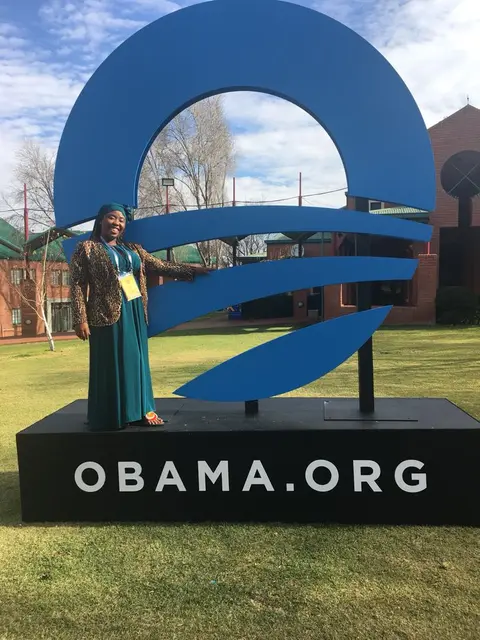 Once back in Cameroon, Mbuli sought professional help to cope with the trauma she had endured.
“I always felt like someone was calling my name because in the last home I worked in, the three sons and their parents would all be calling me at the same time to do things for them,” she said. “So for a long time after I got home, all I would hear was, ‘Francisca! Francisca!’ in my head, and I would get so confused because I wouldn’t know who was calling me.”
Her psychiatrist advised her to tell her story without reservation. That would begin the healing process, he told her.
Mbuli took his advice.
“I started with my family. I shared my story and showed them the pictures I had. Then I went to my neighborhood and went from door to door telling them what happened to me. I went to the villages because those are areas traffickers target and trick parents into sending their children to greener pastures. The community was responding well, and that gave me the zeal to continue.” – Francisca Awah Mbuli
This was the beginning of what would grow into Survivors Network Cameroon – a foundation that rescues, empowers victims and survivors of human trafficking. The organization also raises awareness of trafficking through campaigns.
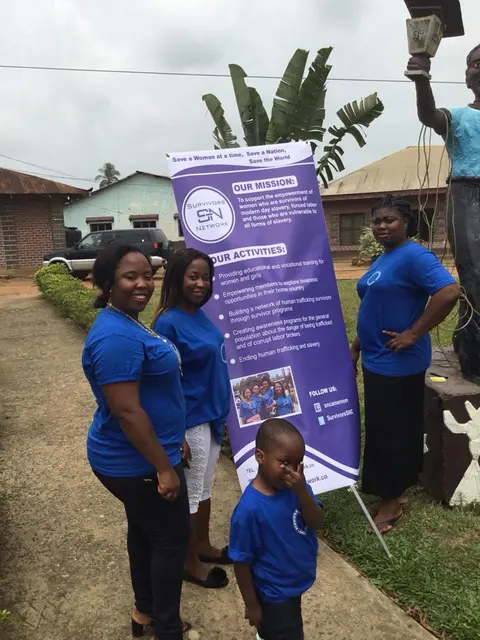 Mbuli’s organization has guided the rescue of over 500 women from sub-Sahara African countries. Survivors Network has also paid for the flights for 28 women escaping captivity, with the help of Freedom for All.
“We have also done internal rescues. I actually have one room in my home for runaway maids. When they escape from wherever they were trafficked, they find it difficult to go back to their families because their families would have sacrificed everything to send them away. So when the maids return, they are seem as failures,” Mbuli said.
Survivors Network also works with internally displaced persons (IDPs) in Cameroon who have fled their homes due to the political and human rights crisis in the anglophone Southwest and Northwest regions of Cameroon.
According to United Nations, at least 160,000 people have been internally displaced in the two affected regions.
Mbuli said internally displaced persons (IDPs) are especially vulnerable to traffickers.
“Due to this crisis, a lot of people in the villages have lost their valuable properties and relatives. Our organization now works to give them life again,” she said.
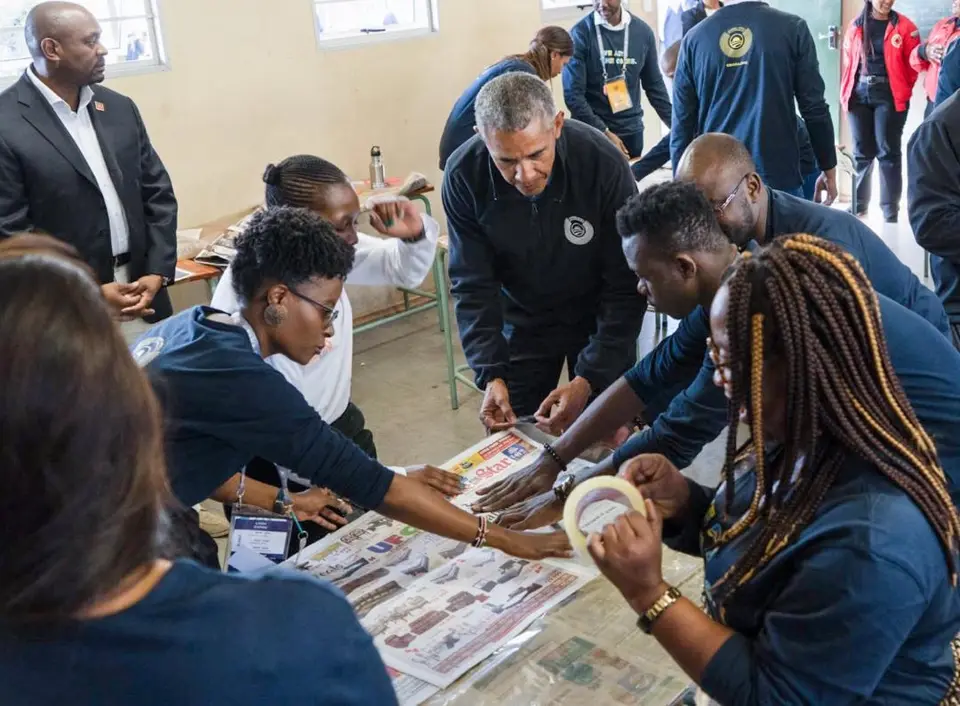 Image courtesy of Francisca Awah Mbuli
To this end, Mbuli and her team travel great distances to deliver food to those in need. She also travels locally seeking any and every opportunity to warn people about trafficking. She has been covered by numerous media outlets, including CNN’s Freedom Project.
She was recently honoured with the 'TIP Report Hero' for her efforts in the fight against human trafficking in the presence of Ivanka Trump and the US Secretary of State Mike Pompeo.
After seeing her receive national and international recognition, Mbuli’s trafficker reached out to her through someone she knew and threatened to kidnap her son if she mentioned his name, Mbuli said.
“I sent a message back with his friends to tell him I wanted to meet him one-on-one, so I can give him money to buy a drink because I studied human rights and multiculturalism in Norway, and I’ve always wanted to work in an international organization,” she said. “So, thanks to him trafficking me, I’m starting to realize my dreams. Despite all I went through, it all happened for a reason, so thanks to him.”
Survivors Network’s greatest need is for funding to continue their efforts to rescue and support survivors of human trafficking, and internally displaced persons in Cameroon.