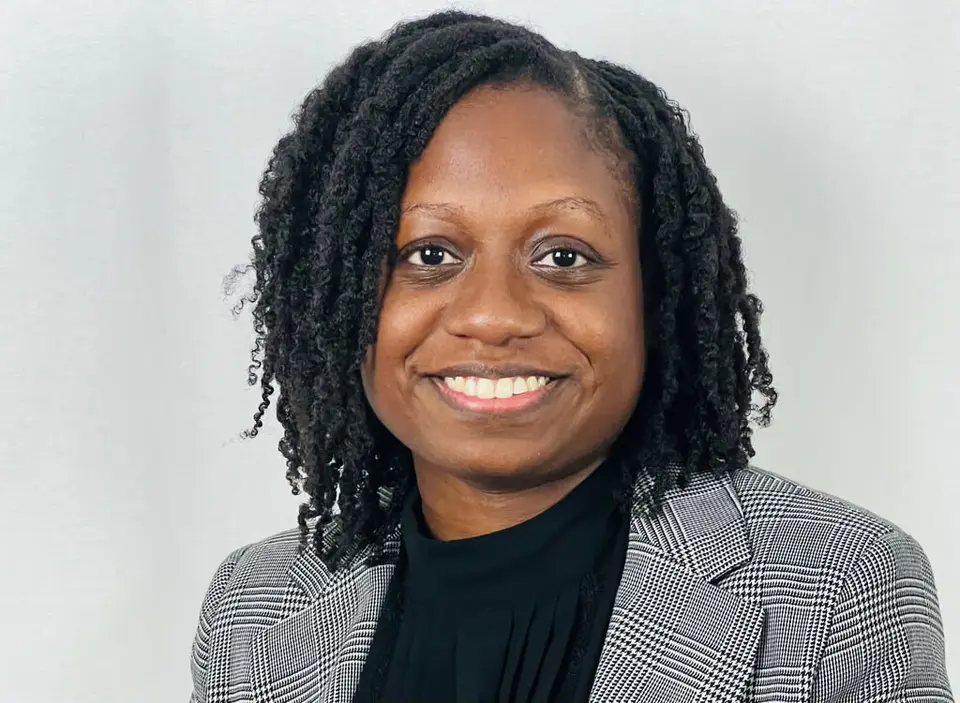
In-depth story: Dr. Praise Matemavi - From Teen Mom to Transplant Surgeon
An unplanned pregnancy at the age of 18 threatened to derail her dream of one day becoming a surgeon, but she wouldn’t let it. Though she had every reason to give up, failure was not an option. As a single mother of two, she put herself through medical school and was the only woman in her residency class. She fought her way to the top in a male-dominated field despite hearing d
An unplanned pregnancy at the age of 18 threatened to derail her dream of one day becoming a surgeon, but she wouldn’t let it. Though she had every reason to give up, failure was not an option. As a single mother of two, she put herself through medical school and was the only woman in her residency class. She fought her way to the top in a male-dominated field despite hearing discouraging comments like, “Girls don’t belong in an operating room,” from some attending physicians.
Well, the operating room is now her playground, and although her journey to becoming a transplant surgeon has had more twists and turns than a pretzel, she is now one of less than 10 black female transplant surgeons in America.
Dr. Praise Matemavi was born and raised in Zimbabwe and knew very early on what she wanted to be when she grew up.
“I knew I wanted to be a doctor since I was 4 years old…since I knew what a doctor does,” Matemavi told The Weight She Carries. “Then, when I discovered what surgeons do, I said, ‘Oh gosh, I want to be a surgeon.’”
When Matemavi was about 10, a group of cardiac surgeons travelled to Zimbabwe from Loma Linda University in California, USA, to perform congenital heart surgeries on children at Parirenyatwa Hospital in Harare. Matemavi heard about it from her father, who knew someone whose child had heart disease.
“I remember thinking to myself, ‘That sounds so cool, I want to be a cardiothoracic surgeon,’” Matemavi said.
Realizing her interest in medicine, her father bought her a copy of “Gifted Hands: The Ben Carson Story” by Dr. Ben Carson. Matemavi was in fifth grade and finished reading the book in one night. She wanted to be just like Carson, but instead of the brain, she wanted to operate on the heart.
At 14, Matemavi’s family moved to Michigan, USA, partly for her to have a greater opportunity to pursue her dream of becoming a surgeon. The change didn’t affect Matemavi much. She continued to excel in her academics and firmly believed the sky was the limit.
“I always believed in myself,” she said. “I always believed I could do anything I wanted to do. There was never a doubt in my mind that I could do anything.”
Matemavi’s plan to become a doctor faced its first roadblock when she fell pregnant at 18.
“It was devastating,” she said. “First of all, I thought, ‘Oh my gosh, I have committed this huge sin and God is never going to bless me.’ I didn’t know how I was going to ever fulfill my dream. It was sad because that was the one time I saw my dad cry.”
Despite the setback, Matemavi believed everything would work out, and although she would have to find a different avenue to her dream, she would still become a doctor one day. But in the meantime, her natural instinct was to correct the mistake she had made.
“Here I was…pregnant at 18, out of wedlock and I’m a pastor’s kid,” she said. “So for me, the solution was to marry the guy even though there was no love there.”
Matemavi got married in 2000 and tried to make the best of the situation, but what ensued was a troubled marriage filled with pain and abuse, she said.
“I went through so much heartache and pain, and that’s what probably helped fuel my drive,” Matemavi said.
Her parents could see what she was going through, but she tried to shield them from the extent of the abuse and didn’t tell anyone what was really going on because she didn’t want to cause her parents pain.
“People who are battered like that generally don’t talk to other people,” Matemavi said. “Even if you have a loving, supportive family, it’s hard to say, ‘This is what’s happening in my home.’
Meanwhile, Matemavi decided to go to nursing school. It wasn’t her preference, but it would provide a steady stream of income to pay for school because she wasn’t a U.S. Citizen at the time, and therefore didn’t have access to any financial aid.
She completed a two-year nursing program and began working as a nurse.
“I have to say that being a young mom gave me focus. At the end of the day, my priority was pursuing my dream for the sake of my children, so that they, too, could do whatever they wanted to do and realize that there are no limitations.” – Dr. Praise Matemavi
Matemavi tried to make things work in her marriage but by the time her second child was born, but said things became so bad that she feared for her life.
“I believed that if I did not get out of that marriage for the sake of my kids, I would end up dead; and then who would take care of my children?” she said. “I’d been through so much emotional and physical abuse at such a young age that by the time I finally walked away from the marriage, my parents were so happy.”
“One of the things that breaks my heart is when I see young girls who don’t know themselves and don’t realize their true value because I was there. And when you don’t know who you are in Christ, you will fall for anything.” – Dr. Praise Matemavi
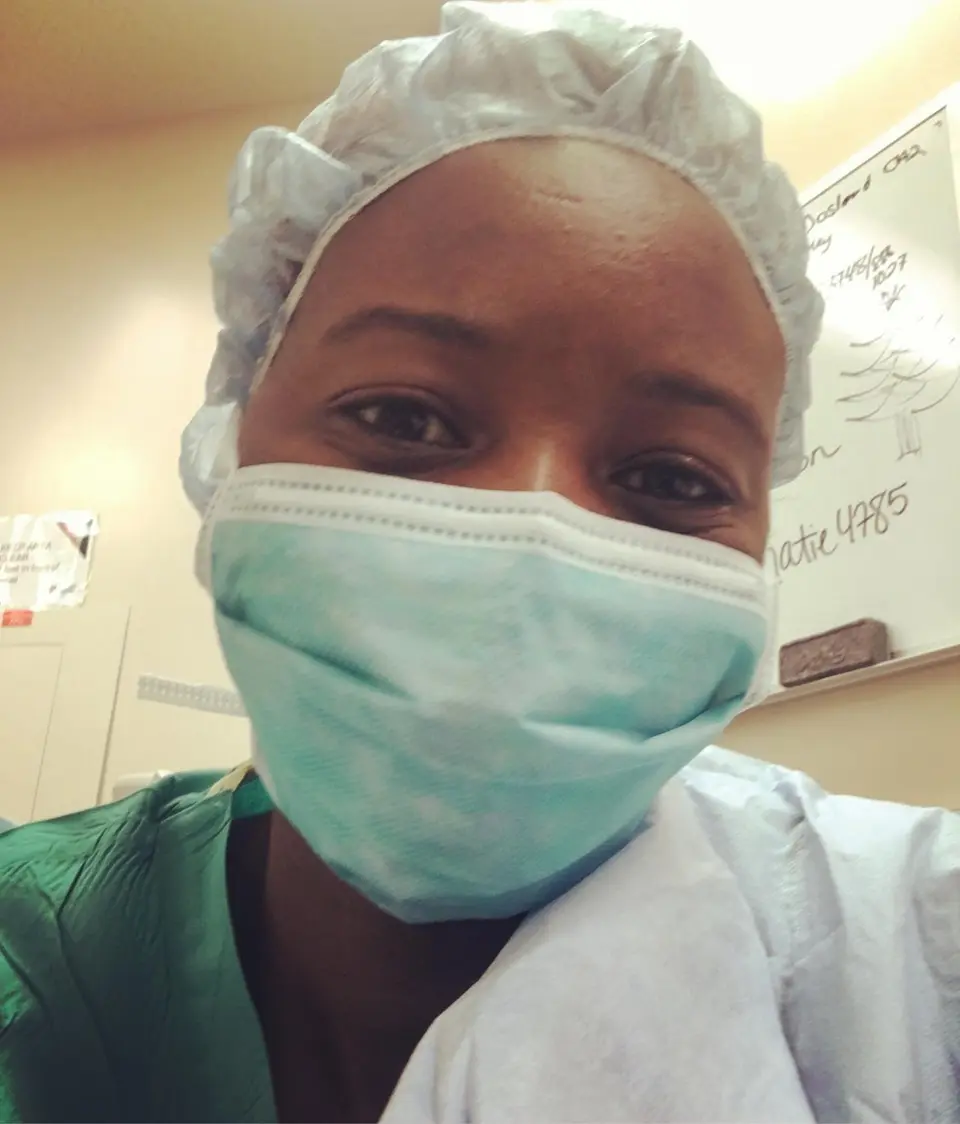
Once Matemavi’s marriage came to an end, she felt free to pursue her dream of becoming a doctor and decided to study for the MCATs (Medical College Admission Test). She took the exam, did very well and began applying to medical schools.
“So now I’ve passed the MCATs, but I don’t have a bachelor’s degree, and all these medical schools require one to get into their programs,” Matemavi recalled. “I had all these interviews lined up to get into these medical programs because the schools were under the impression that I would have a bachelor’s degree by the time the program began.”
Matemavi devised a plan, went to an academic advisor at Sienna Heights University and stated her intentions.
She had one academic year to complete the 60 credits required to earn a bachelor’s degree. And that’s exactly what she planned to do.
“She looked at me and said, ‘Well, that’s not going to be possible’, and I said, ‘Oh yes, it’s going to be possible.”
Matemavi, who was now a single mother to two children under the age of 5, had endured a grueling schedule in order to prepare for the MCATs the previous year. She had enrolled for 20 credits each semester, and since she couldn’t take all the classes at Lake Michigan College due to conflicting class times, she took some of her classes at another community college, Southwestern College, about 40 minutes away.
Every morning, Matemavi would drop off her kids with the babysitter and attend class all day and into the evening. Then, on Fridays, she would work the 3-11 shift, spend Saturdays at church and with her kids, then work a double shift (3pm – 7am) on Saturday and Sunday night into Monday, and then freshen up and head straight to class Monday morning.
Matemavi knew that if she had handled such a rigorous schedule the year before, she could do it again.
“I had a timeline. I wanted to be done with medical school by the time I was 29,” she said. “That had to happen by any means necessary.”
Matemavi, who was 24 at the time, convinced her advisor to allow her to take 30 credits in the fall of 2005 and got As in all her classes. The next semester, she took another 30 credits and earned a bachelor’s degree.
On her birthday, June 24, 2006, Matemavi started medical school.
“If you’re determined and you want it bad enough, you can do anything,” she said. “That’s why I have no sympathy for people who say they cannot achieve their dreams. They can, they just don’t want it bad enough.”
“I sacrificed my social life and I’m socially awkward because I haven’t had a social life since I was 18. And that’s the thing about friendships. There are some friendships that can stand the test of time and withstand that kind of pressure, but some can’t, and that’s okay.” – Dr. Praise Matemavi
While in medical school, Matemavi met and married a fellow medical student believing she had finally found someone who understood her demanding schedule. But by the time she began her surgical residency, there was very little time to spend with her husband...Next Page
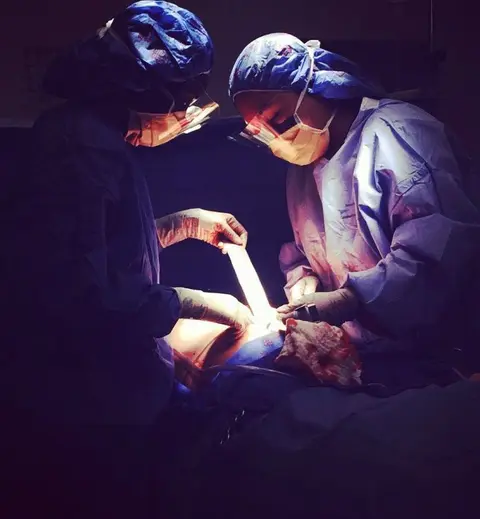 “I had no control over my schedule. I was working 80 hours a week and had many 24-hour shifts,” she said. “So many times I would get home and just pass out because I was so exhausted.”
The more hectic her schedule became, the more Matemavi learned to depended on God to make it through each day. The opposite happened with her husband and the two grew apart.
“During my third year of residency, we went through a divorce,” Matemavi said. “And that’s the hardest year of your training. For somebody who is a perfectionist – who always has to get As in class – failing at a second marriage was a huge blow.”
The devastation she felt made it difficult to get up each morning. Not only was she dealing with the stress and strain of a failing marriage, she still had to concentrate on operating on patients each day.
She clung to God for survival.
“I had prayed, I had fasted; I had done everything possible to try to save my marriage, and God still said ‘No,’” Matemavi said.
“There are things we don’t realize. We don’t tend to see the whole forest, we only see a single tree. And it’s very difficult when you are going through a hard time to actually look at the big picture.” – Dr. Praise Matemavi
Matemavi pushed through the pain and disappointment but faced another devastating blow a few years later when her mother passed away from inflammatory breast cancer two months before Matemavi was set to graduate from her residency program.
“It was very unexpected. She got sick so fast, and it was such a toil on me because she had been going through this whole journey with me,” Matemavi said. “She was my prayer warrior. I would text her before every surgery, and every time I walked into an operating room, I knew I was covered in prayer.”
Less than a week was all the time Matemavi had to mourn her mother before going back to work. The most difficult part of returning to work was treating patients with the same condition her mother had.
“It was very difficult for me because I’ve taken care of countless women with breast cancer,” Matemavi said. “They’ve practically been cured because of the surgeries I performed, and yet I couldn’t save my own mother.”
Matemavi had planned to retire her mother and wanted her to see the benefits of all the hard work over the years, and finally see her daughter graduate as a surgeon.
What got Matemavi through her dark days was one verse in particular that her father gave her:
“He is the rock, His works are perfect, and all His ways are just. A faithful God who does no wrong, just and upright is He.” - Deuteronomy 32:4
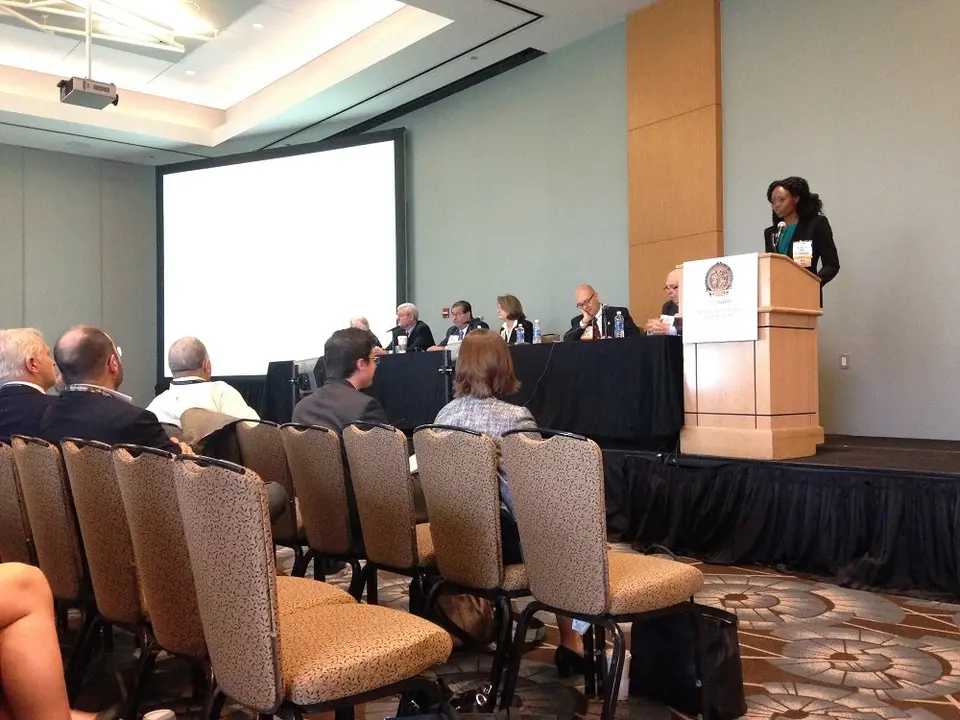 Two months later, Matemavi graduated from her residency program in June, 2017, and began her transplant surgery fellowship in Omaha, Nebraska, a few months later.
Although she had wanted to be a cardiac surgeon for most of her life, Matemavi had decided during her second year as a medical student that she wanted to specialize in transplant surgery.
At the time, she had been reading a book by a pediatric cardiothoracic surgeon and mentioned to an adult cardiothoracic lecturer that she was reading the book and found it interesting how technically challenging the procedures are.
Her lecturer told her that the only other field that is technically comparable or even more difficult than pediatric cardiothoracic surgery is liver transplant surgery.
“In my mind I was imagining these small little hearts and these cardiac surgeons are working on these tiny human beings, and yet this lecturer was telling me that there’s something equally as difficult or possibly even more challenging? I had to look into it more.” – Dr. Praise Matemavi
“I decided there and then that I was going to do the most difficult thing there is to do…whether it was pediatric cardiac surgery or transplant surgery,” Matemavi said.
Transplant surgery intrigued her more.
“I was so fascinated by it – how you can take someone’s organs and place them inside somebody else, and they can have a completely normal life after that,” she said.
Unfortunately transplant surgery offers the worst lifestyle. It has the worst hours and is very challenging with surgeries lasting anywhere from 8-12 hours. As a result, not many doctors go into transplant surgery and it’s a very small community - smaller than most specialties.
“It’s a more taxing job because the operations are more difficult, take so long, and the patients are often the sickest patients,” Matemavi said. “When you do a liver transplant, it’s not uncommon to give a patient 20 units of blood and 20 units of fresh frozen plasma because these patients are so sick, and because their liver has failed, you’re basically resetting everything.”
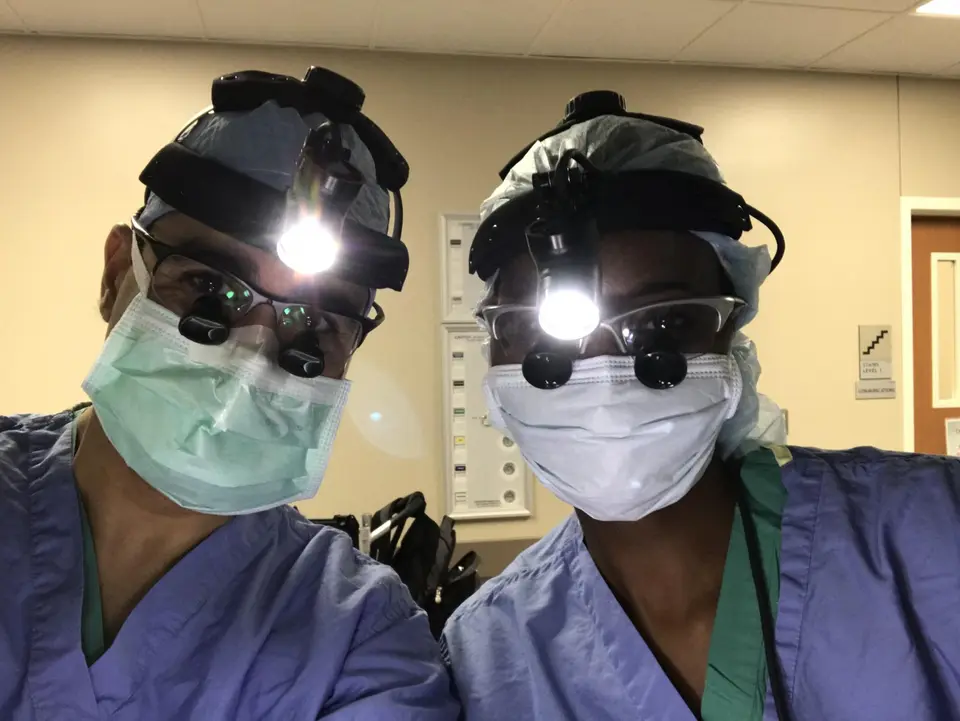 Matemavi explained that transplant surgeons often have to recover organs at night because hospitals prefer to use their operating rooms during the day for elective operations. So she often ends up hopping onto a jet and going to recover organs in the middle of the night because that’s when the operating rooms are available.
Nonetheless, she wouldn’t trade it for anything.
“That’s what I’ve dreamt of since being a second-year medical student,” she said. “I’ve dreamt of being on jets, being flown all over the country to recover organs and then coming back to transplant them. I always tell my kids, “If you dream it, it’s possible; but you have to be able to put everything you have into it. There will be sacrifices that you’ll have to make to get to where you want to be. But if you put your all into it, there is no reason why you can’t be successful.’”
One thing Matemavi has noticed over the years is that the higher up the ladder she climbs, the fewer women of colour she sees.
“There are less than 10 black female transplant surgeons that are practicing or in fellowship in the entire country,” Matemavi said. “And we all know each other.”
Matemavi said that being black isn’t something that has been an issue for her. However, being a woman has presented its own set of challenges over the years, particularly because she was the only woman in her residency class. One attending doctor once commented that “girls do not belong in an operating room”.
At one point, seeds of doubt began to take root because every time she brought up her plan to specialize in transplant surgery, her medical mentors would try to dissuade her from doing so. They kept telling her how difficult the field is, and soon Matemavi began to wonder if she had what it took to be a transplant surgeon, even though she had scored the highest in her class on all her shelf exams in medical school.
“One of my attendings at the time told me that I was a great doctor and surgeon, but said I should be a breast surgeon because the operations are easier and the lifestyle is better,” Matemavi said. “I thought, ‘Why? He would have never said this to any of the guys.’”
On another occasion, an older and well-respected attending commended her on her intelligence and precision and suggested she become a plastic surgeon because that would be a better fit for her since she is “very particular about everything”.
“Surgery, as a whole, is a very white male-dominated field. As with most other fields, the higher up you go, the more differently you are treated. It’s one of those things where your margin of error is very small and it’s very unfair because your male counterparts can make errors and nobody really wonders about their competence. But as a female, no matter how great you are, whenever you do make a mistake - which happens because no one is perfect - you are judged more harshly.” – Dr. Praise Matemavi
Matemavi said she is undermined the most when she travels to hospitals to recover organs, and the hospital staff automatically start talking to the assistant who accompanies her, who is usually a white male, because they assume he is the surgeon.
“I just let them go ahead because I know they’ll have to come and talk to me eventually so I can tell them what kind of equipment I need and exactly how I want things to go,” she said. “It’s one of those things I’ve had to learn to deal with and it doesn’t bother me much anymore.”
She also gets a lot of comments from patients on how young she looks when she walks into their rooms to introduce herself as the surgeon who will be operating on them...Next Page
“I never tell them how old I am,” Matemavi said. “I tell them that I’ve been in school for 30 years, so I’m old enough.”
What Matemavi has fought even more than the external battles she has faced is learning to forgive herself when she makes mistakes. Matemavi is such a perfectionist that in school she would opt to write her papers in pencil so that if she made a mistake, she could erase it and her paper would still be perfect.
“If I wrote in pen and I made a mistake, you would never see me cross it out and make the correction,” she said. “I would get a brand new sheet of paper and begin all over again.”
Now, Matemavi is learning to forgive herself more. She has also found love again and is married to a man who understands her passion and doesn’t complain about her schedule, despite the fact that she currently works 120 hours a week and is on call every day.
“I’m a pampered woman who is well taken care of,” she said. “When I look at how far I’ve come, it’s truly a testament of how God can take all those ashes and make something beautiful.”
To anyone trying to figure out how to accomplish their dreams, Matemavi’s message is simple, yet profound: GO FOR IT.
“Even if you have young kids, when the kids go to bed, work on your dream…whatever it is,” she said. “If it means that you have to sleep less, so be it. You have to be willing to make sacrifices and be okay with delayed gratification.”
Matemavi will be completing her fellowship in 18 months, and said she has excelled in her field because she learned how to “do it afraid.”
“I can’t tell you how many times there was an operation on the board and I would take a look and say, ‘This is going to be such a difficult surgery,’ but I would force myself to go into that operating room with my heart racing and sweaty palms and give it my best shot. So it doesn’t matter how scared you feel, you have to do it afraid.” – Dr. Praise Matemavi
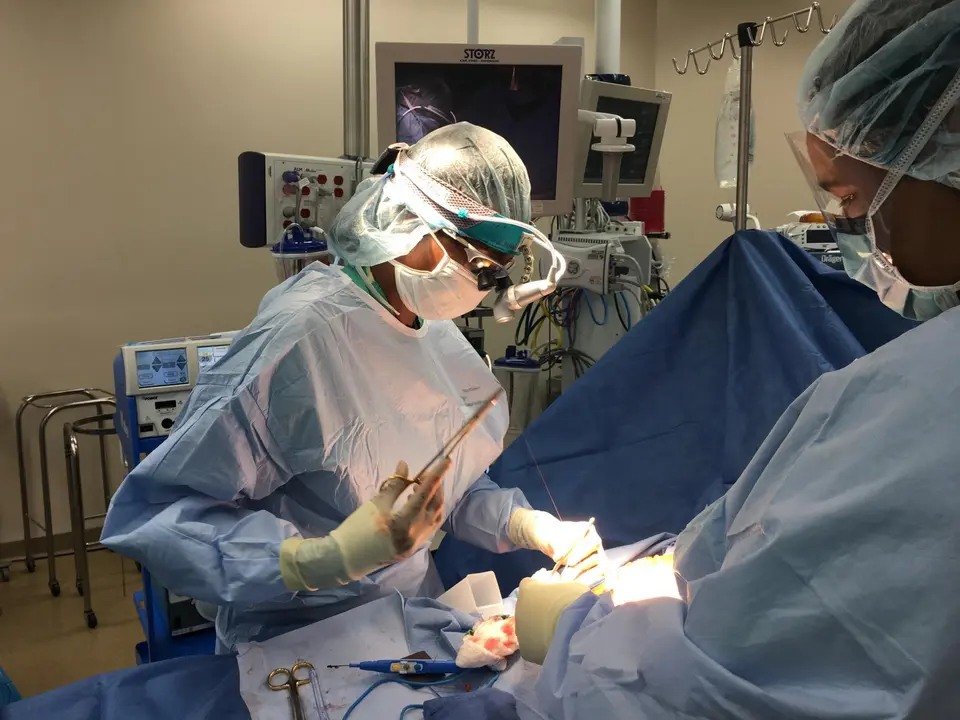 She has had to believe in herself every time she travels away and steps foot in an operating room in another hospital to recover organs because she is often the only surgeon in that hospital with the expertise to complete the task.
“There is no standard with liver transplants; each case is unique. If I run into any complications during the surgery, I am on my own and there is no one there to help me,” she said. “I either have to make a call to my home hospital to discuss my options, or I have to figure it out on my own.”
In those tense moments, Matemavi has learned to believe in herself, and always reminds herself that God has already equipped her with everything she needs to get the job done.
“God will never put you in a situation where He will leave you,” she said. “He will give you everything you need to be successful.”
Above all, Matemavi credits much of her success to God, her supportive family, and her all-time favourite Bible verse which her father led her to during her residency:
“Have I not commanded you? Be strong and courageous. Do not be afraid; do not be discouraged, for the Lord your God will be with you wherever you go.” – Joshua 1:9
“We have to stop limiting ourselves. Oftentimes we go to God with a little cup and say, ‘Lord, please fill my cup.’ No, get the biggest dish you can find.” – Dr. Praise Matemavi.
Despite having every excuse to give up on her dream, Matemavi has persevered and refused to let anything stand in her way. Her path to becoming a surgeon has not been the typical route, but her drive has led her to the top. And the dream of that little Zimbabwean girl whose eyes widened with wonderment as she flipped through the pages of “Gifted Hands” that night many years ago, has become a reality in a country nearly 10 thousand miles away.
Three words sum up her story perfectly: Determination. Resilience. God.
-------------
Follow Dr. Praise Matemavi on social media:
Instagram: https://www.instagram.com/drpraise0624/
Facebook: https://www.facebook.com/profile.php?id=2366461